 Skip to content

Scientific articles
VITIWIKEN CREAM:
a new approach to Vitiligo
Maria Efenesia Baffa, Roberto Maglie, Francesca Montefusco, Stefano Senatore, Emiliano Antiga Department of Health Sciences - Section of Dermatology, University of Florence.

Index
” Vitiligo is a chronic pigmentation disorder that is characterized by a reduction in the activity and number of melanocytes in the affected skin. The condition affects between 0.5% and 2% of the world’s population, with no obvious differences in incidence between males and females. Onset can occur in all age groups, but it is most common in the 10- to 30-year-old age group. Vitiligo is currently classified into segmental(SV) and nonsegmental(NSV). of which there are several variants: mucosal, focal, acrofacial, generalized, universal, and some rarer variants.
The clinic is characterized by the appearance of hypopigmented or achromic, non-desquamating, usually asymptomatic macules that can affect any part of the body, mostly symmetrically. The pathogenesis of vitiligo remains largely largely unknown, hence the difficulty in finding targeted and effective therapies, especially in the long term.
Numerous studies have shown that oxidative stress plays a primary role in the development of vitiligo. In this regard, melanocytes isolated from vitiligo patients have been shown to be more susceptible to cell damage induced by oxidative stress.
Read the full article!
An imbalance of the oxidoreductive system has been observed with an ‘elevation of oxidative stress markers (superoxide dismutase, malondialdehyde, ROS) and antioxidant activity. Therefore, the hypothesis has been advanced that the melanocyte, as a result of oxidative stress-induced cellular damage, which causes cell death by melanocyte apoptosis, may unmask or release proteins that subsequently serve as antigens and activate the cell-mediated immune response against other melanocytes. In such observations lies the rationale for the use of topical and/or systemic antioxidants in the treatment of vitiligo, the use of which several open trials support.
Among the various substances with antioxidant power, PIPER NIGRUM, a plant belonging to the Piperaceae family and cultivated mainly in tropical regions (Indonesia, Brazil and India), is particularly interesting in vitiligo.
This particular species owes its antioxidant properties, along with its antihistamine, antimicrobial properties, to its main alkaloid, piperine. In addition, both in vitro and in vivo studies show that P. nigrum also has melanocyte proliferation-stimulating effects.
The repigmentation generally observed following the topical use of P. nigrum preparations follows a perifollicular pattern in the early stages, this finding is consistent with the scientific literature, which asserts precisely that repigmentation is possible in areas where there are pigmented hairs, an element suggestive of the presence of a melanin reservoir.
Another molecule of wide interest for its antioxidant power is the resveratrol, a component extracted from the roots of the plant Veratrum grandiflorum. It is a natural polyphenol produced by the plant as a result of UV damage or as a defense mechanism against pathogenic microorganisms. […]”
Read the full article!
Share the article on your socials!
Stay up to date*, sign up for our Newsletter to receive every article on your email!
You may also be interested in.
-
 23 Feb 2026STUDIO SU UN NUTRACEUTICO ED UNA LOZIONE FITOTERAPICA IN DONNE CON ALOPECIA FEMMINILE POST-MENOPAUSA
 -
 15 Sep 2025THE USE OF GINKGO BILOBA EXTRACT IN THE TREATMENT OF CHRONIC FATIGUE SYNDROME
 -
 04 Jul 2025ON THE USE OF SPECIFIC NUTRACEUTICALS AS ADJUNCTS TO TREATMENTS FOR ADHD
 -
 24 Jun 2025THEY TALK ABOUT TRIVIS UV ON “THE SKIN”
 -
 19 Jun 2025ON THE BENEFITS OF HYALURONIC ACID ON SCALP AND FOLLICLES
Products in this article:
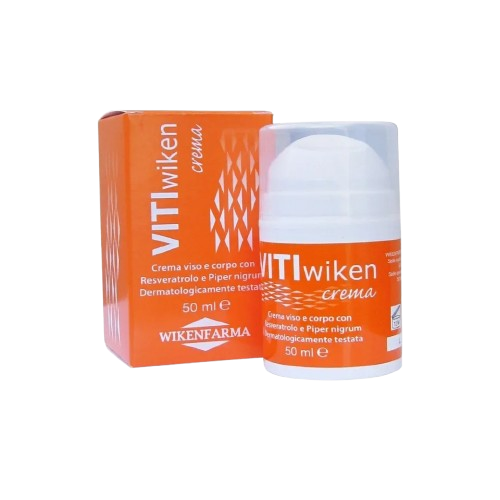
VITIwiken Cream 50ml
VITIwiken Crema is a cream with high antioxidant power that contributes topically to promote repigmentation of areas affected by vitiligo


