 Skip to content

Scientific articles
QUESTIONS AND ANSWERS ON TRICHOLOGICAL DISORDERS IN PEDIATRIC AGE

1) Are trichological disorders common in pediatric age?
Absolutely. Contrary to popular belief, they account for a substantial proportion of admissions to pediatric dermatology outpatient clinics. Trichological disorders in pediatric age differ in etiopathogenesis and clinical features. They range from more common forms, for example,alopecia areata orandrogenetic alopecia affecting both male and female adolescents, to rarer forms caused by genetic abnormalities such as moniletrix.
Moniletrix begins early in the neonatal period. Alopecia, associated with follicular hyperkeratosis and perifollicular erythema, may affect only the occiput and nape of the neck or, in severe forms, the entire scalp, eyebrows, eyelashes, and secondary hairs. Infants have characteristic dysplasia of the hair shafts: dystrophic narrowings regularly separated by elliptical nodes of normal thickness, giving the affected hairs a moniliform appearance. The thin internodal region tends to break up. In some cases, dystrophy of the nails (coilonichia, literally “spoon nails”) of the hands and feet has been described.
2) Is there evidence in the literature that supports the use of Minoxidil in the treatment of moniletrix?
Yes, there are several studies testifying to its benefit in therapeutic management. In studies using Minoxidil, in most cases topically, clinical benefit is demonstrated as early as 4 to 5 months of treatment, so a time that we can consider relatively short. The aspects that I would like to emphasize are essentially two: the first, which I think is very interesting, is that the data are also confirmed in the pediatric population; the second is that in no case are significant side effects reported. The most frequently reported complaint is a trivial reddening of the scalp(erythema), which in some cases is associated with itching or burning(burning pain), and which resolves in the short term with the application of low-potency topical corticosteroids. Thus, it is not only an effective drug but also a safe one.
3) Instead, speaking of N-Acetyl Cysteine, can we also recommend it in pediatric age? If so, in what diseases specifically?
Yes, certainly both in the child and even more so in the adolescent. The most documented clinical benefit in the literature is in the therapeutic management of trichotillomania. This is a disorder characterized by the compulsive behavior of pulling hair and hair off the body. This clearly leads over time to alopecia (traction). Alongside pharmacological and nonpharmacological therapies-such as cognitive-behavioral therapy-the use of N-Acetyl Cysteine is enthusiastically reported in the literature. Its benefit lies in its normalizing action on glutamatergic transmission, which is impaired in this type of disorder.
4) Speaking, however, of biotin…Are there cases of alopecia in which Biotin supplementation significantly changes the patient’s clinical picture?
To understand the importance of biotin for hair health, the most striking example is surely the biotinidase deficiency. Biotinidase is an enzyme that catalyzes the removal of biotin from carboxylases, thus generating biotin for reuse. Biotinidase deficiency is an autosomal recessive genetic disorder that thus results in an inability to reuse biotin. More than 150 mutations in the BTD gene are known to be associated with the disease. The prevalence of clinical biotinidase deficiency (BTD) is estimated to be 1/61,000. The frequency of carriers in the general population is about 1/120. Symptoms of BTD deficiency typically appear in the first few months of life, although late onset has been described.
In severe cases (less than 10% of normal mean serum biotinidase activity), symptoms include seizures, hypotonia, seborrheic eczema, alopecia, ataxia, hearing loss, fungal infections, and developmental delay. BTD is identified by newborn screening when available. Other cases are diagnosed on the basis of clinical signs and symptoms and are confirmed by demonstration of defective BTD activity in serum. A search for mutations in the BTD gene is also possible. As for the therapeutic management of affected patients, oral supplementation of biotin in a free, non-protein-bound form is, in this case, the treatment of first choice, bringing enormous clinical benefit to affected patients. From the dermatological point of view, in particular, considering both alopecia and seborrheic eczema, the result is surprising.
5) What is the daily intake rate considered adequate?
The dose considered adequate ranges from 5 to 30 μg/day depending on age and varies further in the case of pregnant women. Biotin deficiency is not frequently encountered. We can say the same for nutritional excess, which even during supplementation is unlikely, and with it its toxicity.
6) Besides biotin and NAC, are there any other active ingredients that are important for managing childhood alopecia?
Recent studies have revealed the connection between a very common pediatric form of alopecia, alopecia areata, and vitamin D deficiency. The cause of alopecia areata has not yet been fully elucidated. The ‘etiology, which is multifactorial, depends on the combined action of environmental and genetic factors. An autoimmune basis is recognized, that is, hair follicles are attacked by the immune system. Recognized risk factors are atopy (hereditary predisposition to allergic diseases), trisomy 21, autoimmune diseases, infections, emotional stress, a family predisposition.
Alopecia areata is manifested by the sudden appearance of one or more hairless (glabrous) patches, varying in size–from a few millimeters to a few centimeters–round, sharp-edged, and smooth-surfaced, without redness or scaling. The evolution of alopecia areata is variable and changes from patient to patient. Healing of patches does not occur simultaneously on all areas: generally, alopecia in the occipital area (at the back of the head) involves longer healing times than in other areas. Some patients experience relapse.
In 5-10% of cases, all hair loss(total alopecia) occurs, which, when associated with all hair loss, is called universal alopecia. What does the literature tell us about precisely the correlation between alopecia areata and vitamin D deficiency? Mehmet Unal et al. evaluated serum vitamin D levels in 20 patients with alopecia areata and the relationship with disease severity, number of patches and duration of disease, comparing them with 34 healthy controls. There were no statistically significant differences between the two groups so we can well understand that there were other causative factors in patients with alopecia areata. However, the interesting finding, however, is that vitamin D concentration was significantly and negatively correlated with the number of patches, duration of the disease and the SALT score which is a score that quantifies the extent of the disease. Several other studies are perfectly in line with these results. Thus, we can conclude that vitamin D deficiency may aggravate alopecia areata and, therefore, vitamin D supplementation may be useful in the treatment of pediatric alopecia areata in terms of reducing the duration and severity of manifestations.
Dr. Martina Tolone
Share the article on your socials!
Stay up to date*, sign up for our Newsletter to receive every article on your email!
You may also be interested in.
-
 23 Feb 2026STUDIO SU UN NUTRACEUTICO ED UNA LOZIONE FITOTERAPICA IN DONNE CON ALOPECIA FEMMINILE POST-MENOPAUSA
 -
 15 Sep 2025THE USE OF GINKGO BILOBA EXTRACT IN THE TREATMENT OF CHRONIC FATIGUE SYNDROME
 -
 04 Jul 2025ON THE USE OF SPECIFIC NUTRACEUTICALS AS ADJUNCTS TO TREATMENTS FOR ADHD
 -
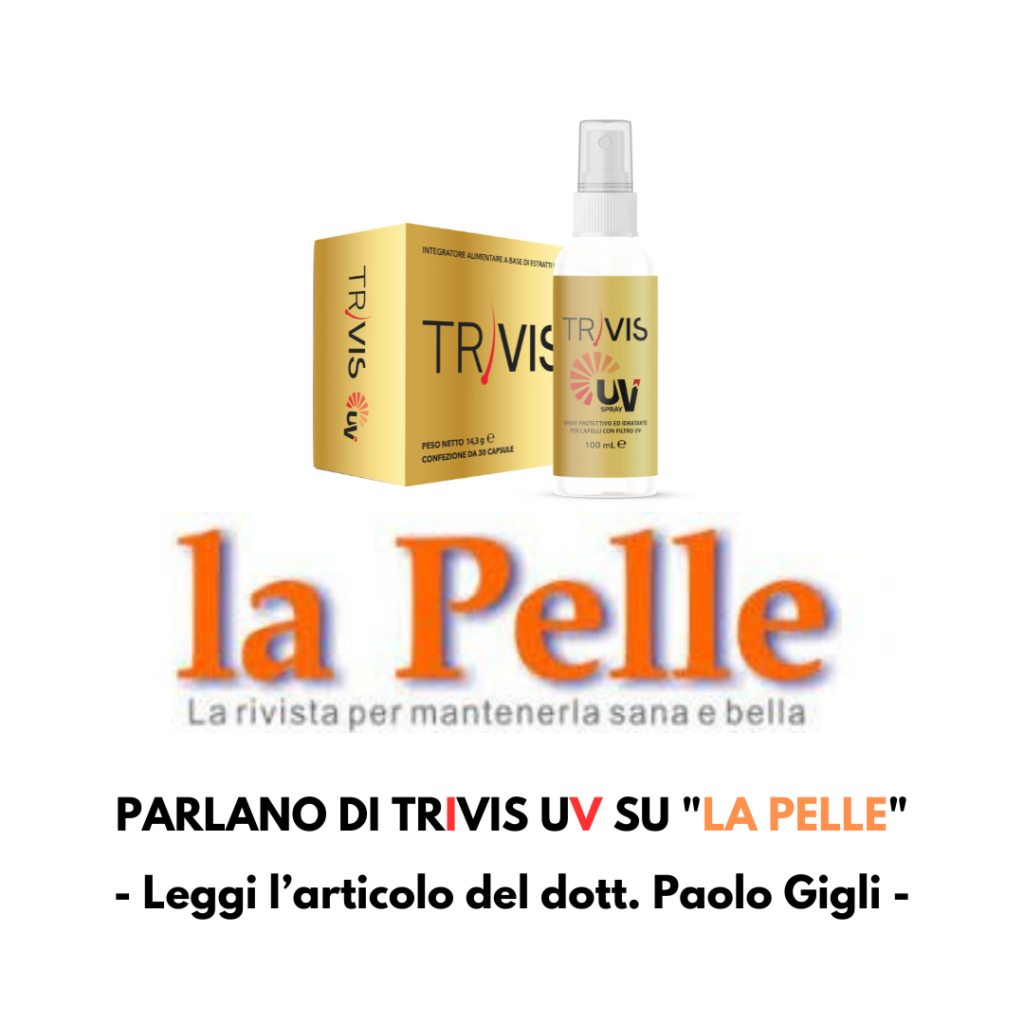 24 Jun 2025THEY TALK ABOUT TRIVIS UV ON “THE SKIN”
 -
 19 Jun 2025ON THE BENEFITS OF HYALURONIC ACID ON SCALP AND FOLLICLES


