 Skip to content

Scientific articles
N-Acetylcysteine: what is it and what is it used for?
Index
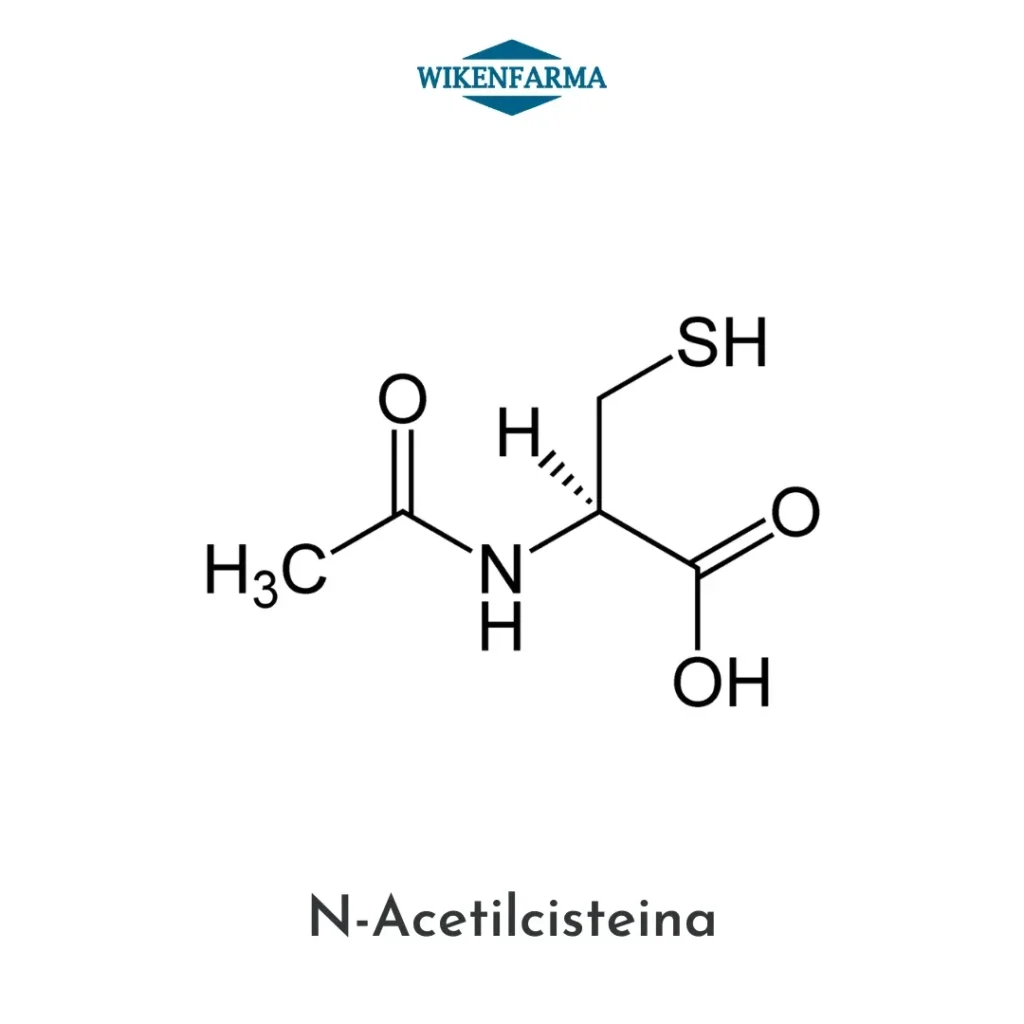
N-Acetylcysteine is a cysteine-derived molecule known for its strong antioxidant activities and for being a precursor of glutathione. (also one of the most powerful antioxidants known to us). N-Acetylcysteine is especially known as the ultimate life-saving antidote in cases of acetaminophen overdose. However, N-Acetylcysteine has also been shown to be effective as a useful antiapoptotic agent for safeguarding hair health. The anti-apoptotic property is also particularly valuable at the pancreatic level as it safeguards the function of beta cells, and at the nervous level it plays a key role in preserving the vitality of neurons. The intake of N-Acetylcysteine is also responsible for preventing fulminant hepatitis and renal failure.
Why is it important?
La N-Acetylcysteine is important for so many reasons: on the one hand certainly as a mucolytic, on the other hand it has a great many other effects including primarily a keratoreregulatory effect since it goes to reorganize keratin and especially its tertiary structure that allows it to reorganize three-dimensionally in space. Important element since there are a number of frequent and very visible clinical situations in which there is a disorganization, or anarchy, of keratin especially on the lengths of the hair. Sometimes this is caused by physicochemical aggression of the hair: for example, heavy use of hair straighteners, improper use of hair dryers or even incongruous cosmetic treatments performed on the lengths. In these cases, hair tends to stiffen and break because the keratin is completely disorganized. N-Acetylcysteine restores proper three-dimensional keratin architecture, and this allows the hair to return to a condition of normal physicochemical and mechanical strength, as well as regain a better appearance.
Another very important effect generated by N-Acetylcysteine goes to affect the Central Nervous System: This is proven by numerous scientific studies that claim that N-Acetylcysteine is primarily a precursor of glutathione, as previously stated, that is, a substance capable of passing the blood-brain barrier and then arriving at the level of certain structures of the Central Nervous System where it is converted first to Cysteine and then to Cystine. The latter in turn goes on to act on certain structures and astrocytes that are in the vicinity of the Nucleus Accumbens, a brain region that plays an important role in some cognitive processes such as motivation, reward, or addiction, and determines a glutamate-modulator such that it activates gabaergic pathways: this sounds like a complicated discussion, but in summary it is intended to state that N-Acetylcysteine induces neuromediators at the level of the central nervous system that go to stabilize mood. This effect that N-Acetylcysteine has on mood is also realized through the fact that glutathione facilitates the release of dopamine, which goes to act as a stabilizer.
In addition, it should not be forgotten that N-Acetylcysteine is also a powerful antioxidant, and the combination of these factors can make us define N-Acetylcysteine as a kind of natural psychopharmaceutical, with few side effects, disguised as a mucolytic. A somewhat colorful definition, but one that gives an idea of the versatility of this substance: these are not claims born “lightly,” for there is scientific literature demonstrating the use of N-Acetylcysteine in the treatment of Trichotillomania, Dermatillomania, and in obsessive compulsive psychosis. Obviously for these treatments the dosage is much higher than that used for the mucolytic.
Diseases treated with N-Acetylcysteine.
Cysteine, as has already been stated, is a glutamate-modulating agent. In astrocytes-the nuclei-at the base of the brain there is a continuous exchange between cysteine and glutamate. By increasing the amount of cysteine in the system there is depletion of glutamate leading to the prevalence of GABA, an inhibitory anti-anxiety and antidepressant neurotransmitter.
It is used in this sense in situations of obsessive-compulsive psychosis which can manifest chemically through Trichotillomania, that is, the tendency to pull one’s hair convulsively, or the Dermatillomania, voluntary injuries of the skin caused unconsciously. It is often used in the treatment of compulsive gambling cases: people who gamble compulsively are treated with high dosages of N-Acetylcysteine–we speak of as much as 2400 ml per day–for this very purpose. Recently, its satisfactory use for trichological disorders called Telogen Effluvium and Telogen Effluvium from Stress. precisely because of their close connection with the patient’s mental and physical health.
What are the recommended dosages?
It has been successfully used at the dose of 1200 to 2400 mg in the treatment of mood disorders, depression, bipolar disorder, schizophrenia, and autism, drug addiction, obsessive-compulsive disorder (OCD), and thus also trichotillomania and dermatillomania (part of obsessive-compulsive disorders). It can also be safely taken by the children because it is well tolerated and parents can ward off any concerns while giving their children a full-fledged psycho-modulating agent.
For more information...
Share the article on your socials!
Stay up to date*, sign up for our Newsletter to receive every article on your email!
You may also be interested in.
-
 23 Feb 2026STUDIO SU UN NUTRACEUTICO ED UNA LOZIONE FITOTERAPICA IN DONNE CON ALOPECIA FEMMINILE POST-MENOPAUSA
 -
 15 Sep 2025THE USE OF GINKGO BILOBA EXTRACT IN THE TREATMENT OF CHRONIC FATIGUE SYNDROME
 -
 04 Jul 2025ON THE USE OF SPECIFIC NUTRACEUTICALS AS ADJUNCTS TO TREATMENTS FOR ADHD
 -
 24 Jun 2025THEY TALK ABOUT TRIVIS UV ON “THE SKIN”
 -
 19 Jun 2025ON THE BENEFITS OF HYALURONIC ACID ON SCALP AND FOLLICLES


