 Skip to content

Scientific articles
ON THE IMPORTANCE AND ANTIMICROBIAL EFFECTS OF PROANTHOCYANIDINS
The scientific evidence supporting the use of these polyphenols in specific nutraceuticals
Index
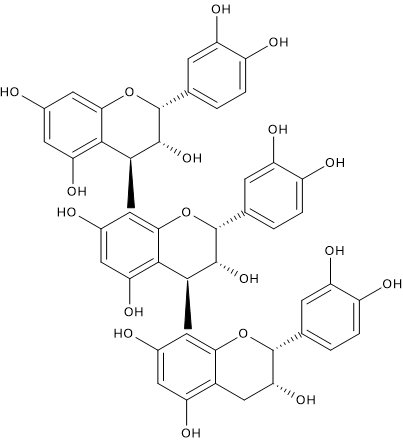
Proanthocyanidins are a particular class of polyphenols consisting largely of oligomers of catechin, epicatechin and gallic acid, linked together to form an ether (or ester) bond.
These molecules are found in many plant species and are called proanthocyanidins because under oxidizing conditions they can depolymerize, oxidizing to anthocyanidins.These are colored polyphenolic compounds, the most common of which is the cyanidin found in blueberries, grapes, apples, radicchio and raspberries and which takes on colors ranging from deep red to cobalt blue depending on pH.
In nature, these molecules play an important defensive function for the plants that produce them, protecting them from infection and predators.[1]
Any polymers also formed from the monomers of proanthocyanidins are named tannins and are also of fundamental importance medically by virtue of their anti-inflammatory and antimicrobial properties.[2,3] Furthermore, it is known in the literature that gallic acid, one of the basic monomers of tannins and proanthocyanidins, is able to exert broad-spectrum antimicrobial activity[4,5]. We can therefore assume similar behavior from the oligomers it forms with catechin and epicatechin.
Where are Proanthocyanidins extracted from?
A recent study highlights how, for example, proanthocyanidins from larch bark extract are toxic to common bacterial pathogens such as Staphylococcus aureus because they destroy its cell wall and cell membrane, preventing the proper production of proteins necessary for the bacterium to function. They also bind to bacterial DNA, preventing its reproduction.[6]
Similar conclusions can be reached by considering other phytoextracts containing such molecules, such as extracts of pine needles [7] or maritime pine bark[8], all of which show significant antimicrobial activity.
How do they act to counter bacterial infections?
In addition to exhibiting directly toxic activity on bacterial species, tannins and proanthocyanidins can also interact with biofilms created by the bacteria themselves as a protective mechanism, damaging them. A biofilm is a film, formed of polymeric material, usually polysaccharides, that envelops and protects one or more bacterial colonies, normally of different species and also producing secretions of an adhesive nature necessary to adhere to the substrate of interest. It is considered an established fact that most of the infections reported in Western countries are caused by multi-species biofilms rather than single bacterial infections.[9]
Various phytoextracts containing proanthocyanidins have been shown to inhibit biofilm formation or their adhesion to the substrate in the case of already formed biofilms. This is especially important especially against antibiotic-resistant bacteria, since in some cases such resistance arises precisely from the formation of biofilms, which make it more difficult for antibiotic molecules to interact with the target bacteria. Furthermore, although the biochemical mechanism that causes it is not exactly clear, there is experimental evidence that the proanthocyanidins and tannins are able to reduce the resistance of both Gram-negative and Gram-positive bacteria. [10][11]
This interaction is probably due to the previously mentioned fact that in some bacteria these molecules are known to prevent transcription of the bacterial DNA, thereby also preventing the functionality of bacterial enzymes used to defend against antibiotics and increasing the effectiveness of common antibiotic treatments that would otherwise already be largely rendered useless by the spread of genes for antibiotic resistance.
Is there a specific and safe solution?
Because of this, an increase in the use of phytoextracts containing Proanthocyanidins and polyphenols is desirable in the therapy of acne, skin and urinary tract infections in the near future. To stay ahead of the curve, research Wikenfarma has developed Dedalox, a nutraceutical specific to strengthen the immune system and fight ongoing inflammation and bacterial infections thanks to proanthocyanidins: unlike other similar products on the market, which are usually very heavy to dispose of and endure, Dedalox hasno side effects and is therefore the safest option for treating infections and strengthening the immune system.
For more information...
Share the article on your socials!
Stay up to date*, sign up for our Newsletter to receive every article on your email!
You may also be interested in.
-
 23 Feb 2026STUDIO SU UN NUTRACEUTICO ED UNA LOZIONE FITOTERAPICA IN DONNE CON ALOPECIA FEMMINILE POST-MENOPAUSA
 -
 15 Sep 2025THE USE OF GINKGO BILOBA EXTRACT IN THE TREATMENT OF CHRONIC FATIGUE SYNDROME
 -
 04 Jul 2025ON THE USE OF SPECIFIC NUTRACEUTICALS AS ADJUNCTS TO TREATMENTS FOR ADHD
 -
 24 Jun 2025THEY TALK ABOUT TRIVIS UV ON “THE SKIN”
 -
 19 Jun 2025ON THE BENEFITS OF HYALURONIC ACID ON SCALP AND FOLLICLES
Products in this article:
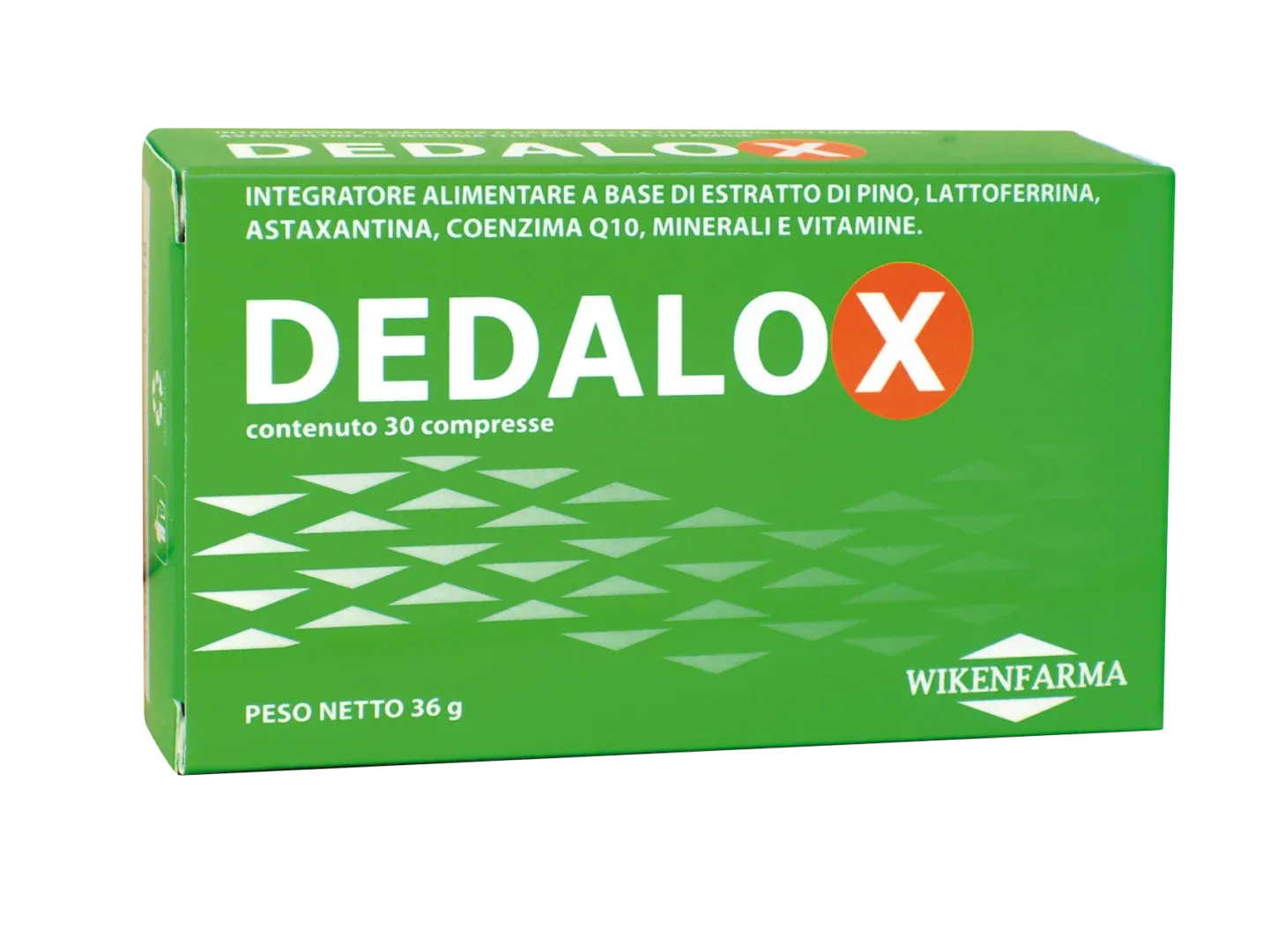
DaedalusX 30CPR
Specific for mild to moderate acne
Bibliography
[1] Amil-Ruiz F, Blanco-Portales R, Muñoz-Blanco J, Caballero JL. The Strawberry Plant Defense Mechanism: A Molecular Review. Plant Cell Physiol. 2011 Nov;52(11):1873-903.
[2] Reddy M, Gupta S, Jacob M, Khan S, Ferreira D. Antioxidant, Antimalarial and Antimicrobial Activities of Tannin-Rich Fractions, Ellagitannins and Phenolic Acids from Punica granatum L. Planta Med. 2007 May;73(5):461-7.
[3] Maisetta G, Batoni G, Caboni P, Esin S, Rinaldi AC, Zucca P. Tannin profile, antioxidant properties, and antimicrobial activity of extracts from two Mediterranean species of parasitic plant Cytinus. BMC Complement Altern Med. 2019 Dec;19(1):82.
[4] Borges A, Ferreira C, Saavedra MJ, Simões M. Antibacterial Activity and Mode of Action of Ferulic and Gallic Acids Against Pathogenic Bacteria. Microbial Drug Resistance. 2013 Aug;19(4):256-65.
[5] Sarjit A, Wang Y, Dykes GA. Antimicrobial activity of gallic acid against thermophilic Campylobacter is strain specific and associated with a loss of calcium ions. Food Microbiol. 2015 Apr;46:227-33.
[6] Li X, He C, Song L, Li T, Cui S, Zhang L, et al. Antimicrobial activity and mechanism of Larch bark procyanidins against <italic>Staphylococcus aureus</italic> Acta Biochim Biophys Sin (Shanghai). 2017 Dec;49(12):1058-66.
[7] Kim N-Y, Jang M-K, Lee D-G, Yu KH, Jang H, Kim M, et al. Comparison of methods for proanthocyanidin extraction from pine (Pinus densiflora) needles and biological activities of the extracts. Nutr Res Pract. 2010;4(1):16.
[8] Ćurković-Perica M, Hrenović J, Kugler N, Goić-Barišić I, Tkalec M. Antibacterial Activity of Pinus pinaster Bark Extract and its Components Against Multidrug-resistant Clinical Isolates of Acinetobacter baumannii. Croatica Chemica Acta. 2015;88(2):133-7.


