 Skip to content

Scientific articles
ON THE USE OF SPERMIDINE IN TRICHOLOGICAL THERAPIES
How spermidine safeguards hair health
Index
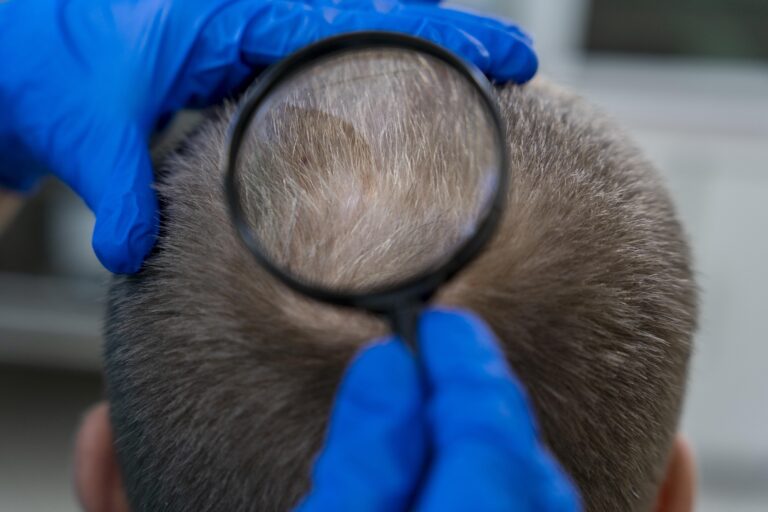
Spermidine is a polyamine known to have antioxidant effects and to regulate cell apoptosis and senescence. It has been used in trichology for many years for the purpose of lengthening the anagen phase of the hair cycle, playing an important role in promoting follicular mitosis.
Spermidine, among other features, is also able to promote melanogenesis.
Specifically, it is known that Spermidine is involved not only in the stimulation of mitosis at the follicular level, but also has an important role in the prevention of cellular senescence.
Senescence is a cellular state in which the cell is no longer able to fulfill its physiological functions and perform mitosis and takes part in the normal process of cell apoptosis at a reduced rate. The state of senescence is correlated with DNA damage due to excessive cell duplications that have led to telomere consumption or due to chromatin alterations. Under physiological conditions, cells that are in a senescent state are consumed and destroyed by macrophages. The accumulation of senescent cells within an organ or tissue can impair its function and is strongly correlated with age: in fact, aged tissues tend to have a greater amount of senescent cells.
Spermidine’s role in the prevention of cellular senescence is also particularly important in maintaining anagen and, probably, is also the cause of such anagenic activity since, as mentioned above, senescent cells are unable to proceed to mitosis and minimizing follicular senescence means maximizing mitosis and, therefore, hair production.
Specifically, Spermidine is a chemical normally also produced by our body, but whose production declines with age. It reduces damage by reactive oxygen species, promotes apoptosis, has an anti-inflammatory, improves mitochondrial function and, finally, moderates and reduces DNA damage by telomere consumption. (Wirth et al., 2021)
So how does spermidine act at the follicle level?
By preventing DNA damage, either due to the effect of reactive oxygen species or due to the gradual consumption of telomeres during mitotic processes, Spermidine allows the effective functional life of hair follicle stem cells to be lengthened and promotes anagen, precisely because it reduces the amount of follicle cells exhibiting senescent characteristics. (Pappalardo et al., 2025)
In addition, as mentioned, Spermidine can also reduce the senescence of hair melanocytes, resulting in improved natural color and partial reduction of ringing. (Kang & Kim, 2021)
By virtue of these properties, it is clear that Spermidine plays a vitally important role in hair health and delaying alopecia: specific formulations high in Spermidine per os can therefore be a valuable aid in lengthening the anagen phase, reducing ringing, and generally improving hair quantity and quality.
How to prevent damage from seasonal telogen effluvium
Spermidine thus turns out to be an excellent tool for prevention to anticipate hair damage, particularly that caused by seasonal telogen effluvium. For this reason, research Wikenfarma has developed RestaX Pre-Effluvium: this is the first nutraceutical completely aimed at the prevention of seasonal (or stress) telogen effluvium. In fact, thanks to the very high concentration of Spermidine present in the capsules, as much as 6mg per tablet, RestaX Pre-Effluvium performs a fundamental task in counteracting follicular senescence, promoting mitosis and melanogenesis at the hair level, with benefits clearly visible after only 4 weeks of use.
For more information...
Bibliography
[1] Kang, S., & Kim, M. (2021). Spermidine promotes melanin production through an MITF signaling pathway. Cell Biochemistry and Function, 39(4), 536-545. https://doi.org/10.1002/cbf.3619
[2] Pappalardo, A., Kim, J. Y., Abaci, H. E., & Christiano, A. M. (2025). Restoration of hair follicle inductive properties by depletion of senescent cells. Aging Cell, 24(1). https://doi.org/10.1111/acel.14353.
[3] Wirth, A., Wolf, B., Huang, C.-K., Glage, S., Hofer, S. J., Bankstahl, M., Bär, C., Thum, T., Kahl, K. G., Sigrist, S. J., Madeo, F., Bankstahl, J. P., & Ponimaskin, E. (2021). Novel aspects of age-protection by spermidine supplementation are associated with preserved telomere length. GeroScience, 43(2), 673-690. https://doi.org/10.1007/s11357-020-00310-0
Share the article on your socials!
Stay up to date*, sign up for our Newsletter to receive every article on your email!
You may also be interested in.
-
 23 Feb 2026STUDIO SU UN NUTRACEUTICO ED UNA LOZIONE FITOTERAPICA IN DONNE CON ALOPECIA FEMMINILE POST-MENOPAUSA
 -
 15 Sep 2025THE USE OF GINKGO BILOBA EXTRACT IN THE TREATMENT OF CHRONIC FATIGUE SYNDROME
 -
 04 Jul 2025ON THE USE OF SPECIFIC NUTRACEUTICALS AS ADJUNCTS TO TREATMENTS FOR ADHD
 -
 24 Jun 2025THEY TALK ABOUT TRIVIS UV ON “THE SKIN”
 -
 19 Jun 2025ON THE BENEFITS OF HYALURONIC ACID ON SCALP AND FOLLICLES


