 Skip to content



Health
DISCOVER HOW TO SAY GOODBYE TO VENOUS STASIS FOREVER
Index
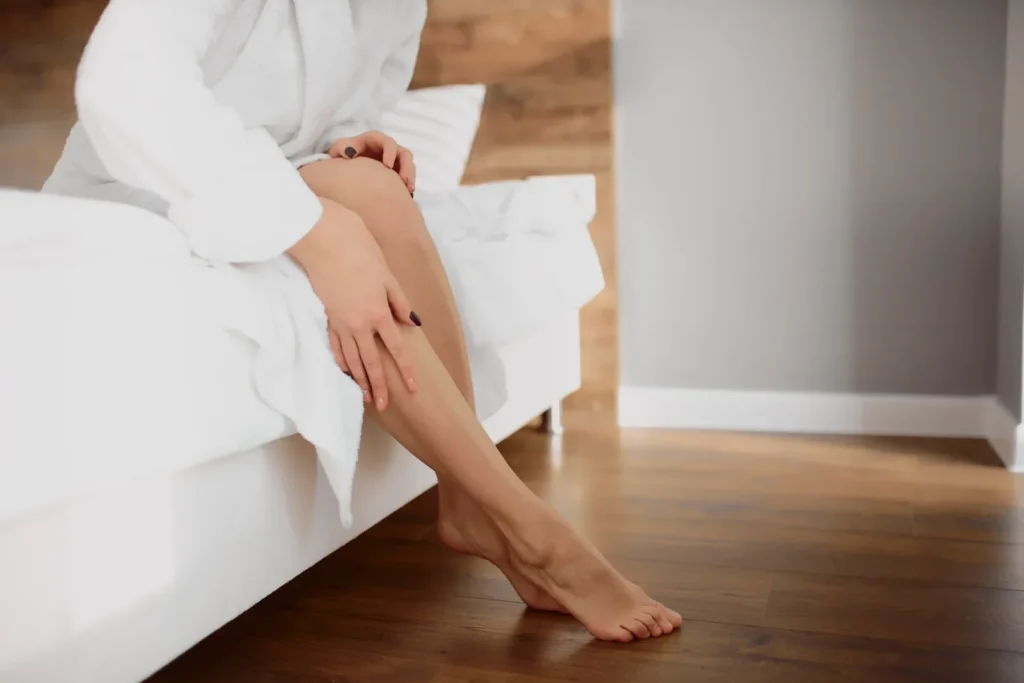
In Italy, according to the Italian Society of Angiology, venous stasis affects about 30 percent of women in their 20s and 30s, and the incidence of this condition increases dramatically with age: in fact, after age 50, the percentage of women affected by venous stasis increases to 50 percent, reaching around80 percent around age 65.
Venous stasis, or venous insufficiency, is a condition in which blood does not flow properly from the legs to the heart and generally can be caused by a number of factors, including weak or damaged veins, blood clots, or obstruction of the veins.
Women are more prone than men to develop this kind of disorder because their circulatory system is more susceptible to hormonal changes that can affect blood flow.
In addition, a sedentary lifestyle, smoking, pregnancy, use of birth control pills, resorting to hormone therapies or wearing particularly high heels greatly increase the occurrence of this condition.
What are the symptoms of venous stasis?
Venous stasis can manifest with symptomatology ranging from mild to severe. Usually, the first alarm bells can be identified in:
- Swelling in the legs and ankles
- Pain, heaviness or throbbing in the legs
- Tired and stiff legs
- Night cramps
- Varicose veins
- Dry, itchy or irritated skin
- Changes in skin pigmentation of the legs and feet
If left untreated, venous stasis can lead to a far more dangerous set of symptoms and complications, as it acts mainly on the circulatory system. Some of the most serious consequences are:
- Venous ulcers: these are open wounds on the skin that usually form on the lower leg. They can be difficult to heal and can lead to infection.
- Stasis dermatitis: this is a condition whereby the skin becomes extremely dry and irritated. It can also cause blemishes to appear on the skin all over the body.
- Changes in skin pigmentation: can cause brown or black spots to appear on the skin. This is caused by the accumulation of waste products in the blood.
- Blood clots: increases the risk of developing blood clots in the deep veins of the legs. These blood clots can be life-threatening if they break loose and travel to the lungs or heart.
Is there any way to counteract it?
As in most cardiovascular diseases, the prevention plays a key role in safeguarding venous well-being; in fact, in order to prevent the onset of venous stasis, it is advisable:
- Exercise regularly so as to promote blood flow in the legs;
- it would be ideal to take a few breaks in case there are days when you are standing and standing for a long time, or sitting;
- High temperatures increase the process of vasodilation. Stretching caused by temperature differences, especially in elderly people, damages veins; therefore, it would be helpful to take precautions during warmer seasons;
- avoid the consumption of cigarettes and the like, because it it worsens drastically the performance of the cardiovascular system.
In cases where the condition has already been diagnosed, it is always possible to limit its damage through nutrition, through drug therapies, or by resorting to sclerotherapy or surgery.
However, it is necessary to consider that:
- diet, despite being the healthiest alternative, is the one that often yields the least results, especially if venous stasis is already advanced;
- various drug therapies can cause additional side effects;
- surgery and sclerotherapy, being quite invasive solutions, can leave after-effects, especially if performed late in life.
But is there a SPECIFIC and SAFE solution to counter venous stasis?
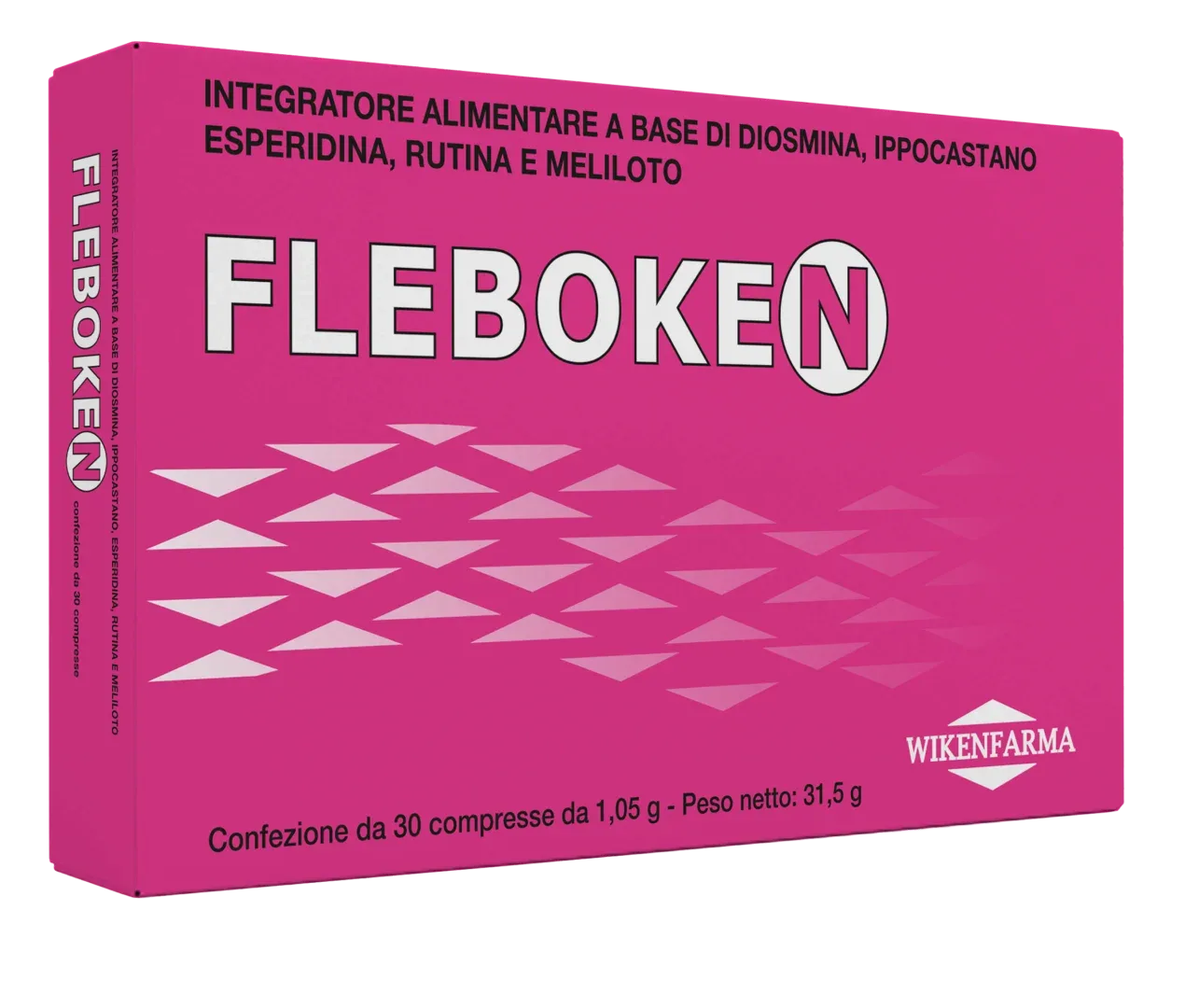
To counter venous stasis, Wikenfarma research has developed FLEBOKEN, a nutraceutical that combats the occurrence of venous stasis in a physiological manner: it directly intervenes on capillary fragility, simultaneously counteracting water retention and cellulite.
Fleboken contains high-dose active ingredients that act synergistically, reinforcing each other’s effect.This nutraceutical is unique in that it takes advantage of the effect of micronized Diosmin (in synergy with the other active ingredients) to optimize the absorption, bioavailability, and thus the effectiveness of all excipients. In addition, Fleboken has no known side effects.
Diosmin, in addition to reinforcing the effects of the other active ingredients present, has innumerable properties, first and foremost that of increasing venous tone; Hesperidin, on the other hand, acts by increasing vascular resistance; Rutin reduces capillary permeability, while Horse Chestnut titrated to Escin has great anti-inflammatory properties and improves lymphatic drainage.
The combination of these active ingredients, in addition to providing immediate relief, is totally safe for health, ensuring maximum bioavailability and physiologically arresting the progression of venous stasis.
Share the article on your socials!
Stay up to date*, sign up for our Newsletter to receive every article on your email!
You may also be interested in.
-
 02 May 2025HOW TO DEAL WITH ACNE WITH SAFE AND NATURAL APPROACHES
 -
 22 Nov 2024HOW TO GET RID OF JOINT PAIN WITH A SIMPLE AND EFFECTIVE SOLUTION
 -
 15 Nov 2024FROM TODAY YOU CAN SAY GOODBYE TO STOMACH ACID!
 -
 24 Sep 2024HOW TO COPE WITH POST-HOLIDAY SYNDROME WITH AN EDGE
 -
 10 Sep 2024A SOLUTION TO INTESTINAL DISORDERS AND MORE...
Products in this article:
Fleboken
Specific product for venous stasis and treatment of problems related to poor circulation (e.g., heavy legs, hemorrhoids, etc.).
